The short version: A law firm website has one job: help a stressed, hurried person feel confident enough to call. On day one it needs real attorney bios, a genuinely useful page for each practice area, a phone number one tap away, a mobile-first design that loads fast, a secure intake form with the right disclaimers, honest trust signals, clean structured data, and copy that stays inside the Oklahoma advertising rules. Everything else can come later.
Most people don't browse law firm websites for fun. They arrive after an accident, an arrest, a divorce filing, a job loss, or a death in the family. They're anxious, they're usually on a phone, and they're comparing you with two or three other firms in the same map results. Your website has minutes -- sometimes seconds -- to answer one question: Can these people help me, and do I trust them?
After years of building websites and running SEO for the Tulsa Bar Association and dozens of Oklahoma law firms, this is the list I use when a firm launches a new site or rebuilds an old one. It's ordered by what matters most.
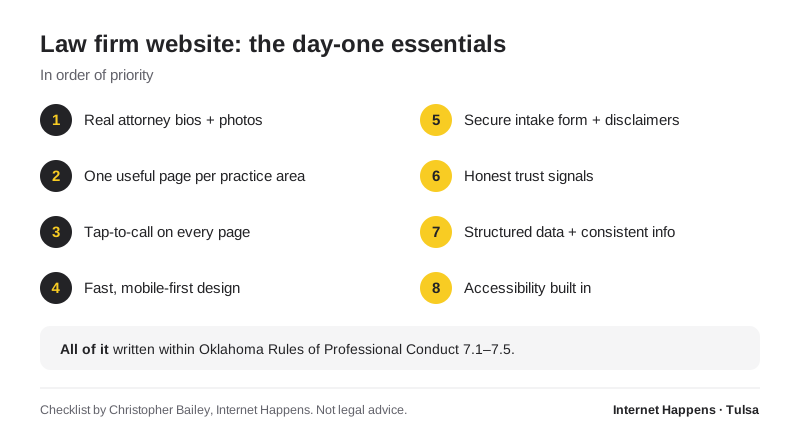
1. Attorney Bios That Read Like a Real Person
People hire lawyers, not logos. After the homepage, attorney bio pages are often among the most-visited pages on a firm's site. Each attorney should have their own page with:
- A current, professional photo -- the real attorney, not stock.
- Practice focus, described in plain language.
- Education, bar admissions (and where), and years in practice.
- Professional involvement, recognitions named with source and year, and community ties.
- A sentence or two in the attorney's own voice about the kind of clients they help.
Accuracy matters here beyond good marketing. Under Oklahoma's Rule 7.1, misleading statements about qualifications and experience are a real risk -- more on that in Oklahoma's attorney advertising rules for law firm websites.
2. One Genuinely Useful Page per Practice Area
A single "Practice Areas" page listing ten bullet points won't rank and won't persuade. Each practice area you want clients for deserves its own page that explains, in plain English:
- Who this page is for, and the situations you handle.
- What typically happens next -- the process, timeline, and what the client should do now.
- Common questions, answered directly.
- How fees generally work, where appropriate.
- A clear next step: call, or request a consultation.
Pages like this are what earn rankings in Google, citations in AI tools like ChatGPT and Google's AI Overviews, and trust from the person reading. Avoid thin "city + practice area" pages with nothing but a swapped-in town name -- they rarely rank and rarely convert.
3. A Phone Number One Tap Away
Legal clients call. Put a tap-to-call phone number in the header of every page, make it large enough to hit with a thumb, and repeat it at the end of every practice area page. If you answer after hours, say so. And measure it -- every tap should be tracked as a key event in Google Analytics, which I walk through in how to track phone calls from your website.
4. Mobile-First and Fast
A worried person searching at 11 p.m. is on a phone. Design for that first. The site should pass Google's Core Web Vitals on mobile -- loading in about 2.5 seconds or less, responding to taps quickly, and not jumping around as it loads. If you're not sure how your current site measures up, here's how to read your PageSpeed Insights report.
5. A Secure Intake Form With the Right Disclaimers
Contact forms on law firm sites carry risks that other businesses don't face. Prospective clients sometimes share sensitive details, and a lawyer can have duties to a prospective client even if the firm is never hired. The ABA addressed lawyer websites specifically in Formal Opinion 10-457. At minimum:
- Serve the entire site over HTTPS.
- Keep the form short -- name, contact information, a brief description, and how they'd like to be contacted.
- Include a clear notice near the submit button that submitting the form doesn't create an attorney-client relationship, and that visitors shouldn't send confidential information until a conflict check is complete.
- Protect the form from spam (invisible tools like reCAPTCHA v3 work without annoying real people) and make sure submissions arrive reliably.
- Link to a privacy policy that explains what you collect and why.
Your ethics obligations here are your call to make, and the OBA's Ethics Counsel is a confidential resource for members. My job is to build the form so it supports whatever approach you choose.
6. Honest Trust Signals
Trust is what separates the firm that gets the call from the one that gets scrolled past. The strongest signals are also the most compliant:
- Real client reviews, with a link to your Google reviews.
- Case results with context and a clear note that past results don't guarantee future outcomes.
- Verifiable credentials -- bar admissions, board memberships, and recognitions named with source and year.
- Real photos of your attorneys, staff, and office.
- Community involvement in the places you serve.
Skip unverifiable superlatives like "best" and "#1," and be careful with "no fee unless we win" -- the OBA's Ethics Counsel has noted that such claims can be misleading without the full costs picture.
7. Structured Data and Consistent Business Information
Behind the scenes, your site should tell search engines and AI tools exactly who you are, using schema.org structured data for your firm (such as the LegalService type) and for each attorney, with your name, address, phone number, hours, and practice areas. Google's guidance is simple: structured data must match what's visible on the page.
That same information should match your Google Business Profile and legal directories exactly. For many firms, the Google Business Profile wins more calls than the website does -- here's how to set one up properly.
8. Accessibility
A law firm's clients include people with disabilities, older clients, and people reading in stressful moments. Build to the WCAG accessibility guidelines from the start: readable contrast, keyboard navigation, descriptive links, labeled form fields, and alt text on images. It's the right thing to do, it reduces legal risk, and accessible sites tend to perform better in search too.
What Can Wait Until Later
Firms often want everything at launch. These are valuable, but they don't need to delay going live:
- A blog or resource library (start with strong practice area pages first).
- Videos from attorneys.
- Spanish-language or other translated pages, if your client base calls for them.
- Live chat or AI chatbots -- and if you add one later, make sure it doesn't give legal advice or collect confidential details without safeguards.
Launching or Rebuilding a Firm Website?
If you're planning a new site or wondering whether your current one is doing its job, I'd be glad to take a look. Law firm websites and SEO are a core part of my Tulsa law firm marketing work, built by someone who understands both what wins clients and the rules your marketing has to follow. For the bigger picture of how clients choose an attorney, start with Legal Marketing 101.