The short version: In Oklahoma, lawyer advertising is governed by Rules 7.1 through 7.5 of the Oklahoma Rules of Professional Conduct, and your website counts. The core rule is simple -- nothing false or misleading -- but it reaches further than most firms expect: case results, reviews, "no fee" promises, the word "specialist," stock photos, your domain name, and even what your marketing company does on your behalf. Here's how each rule shows up on a real law firm website.
Please note: I'm a marketer, not a lawyer, and this article isn't legal advice. It's a practical map of where Oklahoma's advertising rules touch a law firm's website, based on the rules themselves and guidance from the Oklahoma Bar Association. For questions about your specific situation, the OBA's Ethics Counsel offers confidential guidance to members.
Over the years I've had the privilege of working with the Tulsa Bar Association and dozens of Oklahoma law firms on website development and SEO. One pattern shows up again and again: the marketing ideas that work beautifully for a roofing company or a restaurant can put a law firm in an uncomfortable spot with the Bar. Legal marketing has a rulebook the rest of the business world doesn't, and a website is where most of those rules get tested.
The good news is that the rules aren't designed to stop you from marketing. They're designed to keep you honest. Once you know where the lines are, you can build a website that's both aggressive and compliant.
Where the Rules Live
Lawyer advertising in Oklahoma is governed by Rules 7.1 through 7.5 of the Oklahoma Rules of Professional Conduct, in the section titled "Information About Legal Services." The OBA's Ethics Counsel wrote a clear overview of those rules in the April 2024 Oklahoma Bar Journal, and the full text is available on OSCN. Rules change over time -- the OBA has also published proposed revisions to Rule 7.3 -- so always check the current text before relying on specific wording.
Rule 7.1: Nothing False or Misleading -- Including True Things
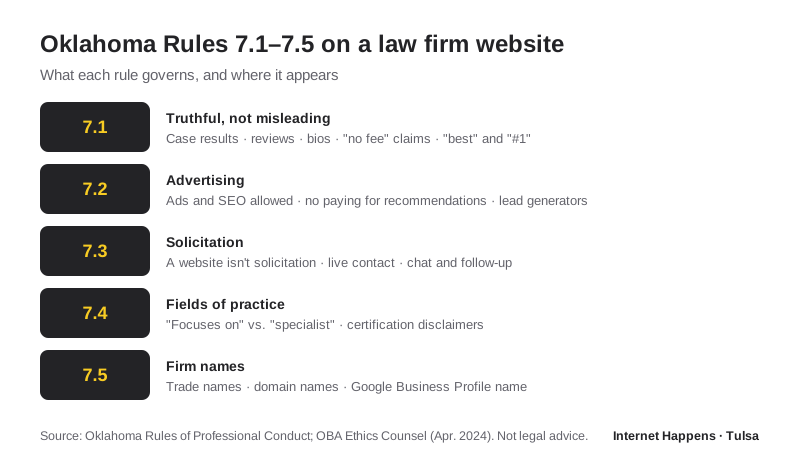
Rule 7.1 is the foundation: a lawyer can't make a false or misleading communication about the lawyer or the lawyer's services. The part that surprises people is that a statement can be literally true and still misleading if it leaves out something important or leads a reasonable person to an unjustified conclusion. According to the OBA's overview, Oklahoma lawyers have been disciplined for misleading statements about qualifications, the number of lawyers in a firm, the experience of those lawyers, and case outcomes.
On a website, Rule 7.1 touches almost everything:
Case results pages
Listing verdicts and settlements can be powerful, but the OBA notes that a true statement of past results can still violate the rule if it creates an unjustified expectation that you'll get the same result for someone else. In other jurisdictions, results have been found misleading without a disclaimer that every case is different. The practical approach: give context (what the case involved), avoid implying a pattern you can't promise, and include a clear note that past results don't guarantee future outcomes.
"No fee unless we win"
This is one of the most common phrases in legal marketing, and one of the easiest to get wrong. The OBA's overview specifically notes that advertising that no fee will be charged may violate the rule unless it also says the client is responsible for costs and expenses of litigation (where that's the case). If your homepage says "no fee," check what the fine print says -- and whether there is any.
Attorney bios and firm size
Bios should be accurate about experience, practice focus, and where each attorney is admitted. Watch the subtle stuff too: stock photos of a conference room full of professionals can imply a firm is bigger than it is, and "our team of attorneys" is misleading if the team is one attorney and two paralegals.
Superlatives and comparisons
"Tulsa's best," "top-rated," and "#1 injury firm" are claims you'd need to be able to back up. If you can't substantiate a comparison, it's a Rule 7.1 risk. Verifiable facts -- years in practice, specific credentials, awards identified by name and year -- are both safer and more persuasive.
Reviews and testimonials
Real client reviews are some of the most valuable trust signals a firm can have. They should be genuine, and they shouldn't be curated in a way that implies a guaranteed outcome. Beyond the Bar rules, the Federal Trade Commission's rule banning fake reviews and testimonials applies to every business, law firms included.
Rule 7.2: Advertising Is Allowed -- Paying for Recommendations Isn't
Rule 7.2 expressly allows lawyers to advertise through written, recorded, or electronic communication -- your website, Google Ads, social media, and email all qualify. The key restriction is that a lawyer can't give anything of value to someone for recommending the lawyer's services, with exceptions for things like the reasonable cost of advertising and the usual charges of a legal service plan or qualified lawyer referral service.
Where this shows up in digital marketing:
- Paying for ads and SEO is fine. That's paying the reasonable cost of advertising.
- Lead generation services need a closer look. The comments to Oklahoma's rule allow paying for client leads, but only if the lead generator doesn't recommend you, doesn't imply it's making a referral without being paid, and doesn't suggest it has analyzed the person's legal problem to pick a lawyer.
- Be careful with incentives for reviews. Offering clients something of value in exchange for a review edges toward paying for a recommendation. Asking every satisfied client for an honest review, with nothing attached, is the safer path.
Rule 7.3: Your Website Isn't Solicitation -- But Live Contact Can Be
Rule 7.3 restricts soliciting employment through live, real-time contact when a significant motive is the lawyer's financial gain, with exceptions for other lawyers, family, close friends, and former clients. The official comment is helpful for marketers: a communication generally isn't solicitation if it's directed to the general public -- a billboard, a banner ad, a website, a TV commercial -- or if it responds to a request for information or is automatically generated in response to internet searches.
So your website, your search ads, and a contact form are on solid ground. Where firms need to think harder:
- Live chat. A chat window a visitor opens to ask a question is a response to a request for information. Staff proactively pushing live conversations at people known to need legal help is a different situation.
- Follow-up. Once someone says they don't want to be contacted, stop. The rule also prohibits any solicitation involving coercion, duress, or harassment.
- AI chatbots. If you add one, make sure it doesn't give legal advice, promise outcomes, or collect confidential details without appropriate safeguards. Information from a prospective client can carry confidentiality obligations even if you're never hired.
Rule 7.4: Be Careful With the Word "Specialist"
Rule 7.4 lets you say that you practice in, concentrate in, or limit your practice to particular fields of law. Claiming certification as a specialist is more restricted: the rule addresses patent and trademark and admiralty practice, and certification by the licensing authority of another state where you're admitted -- which must be accompanied by a statement that the certification isn't recognized by the Supreme Court of the State of Oklahoma.
For website copy, "focuses on," "concentrates in," and "practice limited to" are the safe phrasing. Words like "specialist," "specializing in," and "certified" deserve a second look before they go live -- including in page titles and meta descriptions, which are easy to forget.
Rule 7.5: Firm Names -- and, Practically, Domain Names
Rule 7.5 prohibits firm names, letterhead, and professional designations that are false or misleading. Trade names are allowed as long as they don't imply a connection with a government agency or a public or charitable organization, and they still have to comply with Rule 7.1. You can only state or imply that you practice in a partnership or other organization when that's actually true.
I treat domain names and Google Business Profile names the same way. A domain like "oklahomainjurylawyers.com" for a solo practice, or a business profile name stuffed with keywords that aren't part of your real firm name, raises the same "is this misleading?" question -- and keyword-stuffed business names can also violate Google's own guidelines.
Two More Rules Your Marketing Touches
- Confidentiality. Case studies, testimonials that name clients, and even replies to negative online reviews can reveal client information. Get informed consent before featuring a client, and keep review responses general. The ABA has issued guidance (Formal Opinion 496) specifically about responding to negative online reviews.
- You're responsible for your marketing vendor. Under the rules on supervising non-lawyers, a firm can't hand its marketing to an agency and ignore what goes out under its name. Any marketing partner you hire should understand these rules -- and should welcome your review of everything they publish.
A Quick Compliance Checklist for Your Website
| Check | Rule |
|---|---|
| Case results include context and a "results vary" note | 7.1 |
| Any "no fee" language explains responsibility for costs and expenses | 7.1 |
| Bios accurately state experience and where each attorney is admitted | 7.1 |
| No unsubstantiated "best" or "#1" claims; awards named with year and source | 7.1 |
| Photos don't imply attorneys or offices you don't have | 7.1 |
| Reviews are genuine and not bought or incentivized | 7.1, 7.2 |
| Lead generation vendors don't "recommend" you | 7.2 |
| Chat and follow-up respond to requests; no pressure | 7.3 |
| "Specialist" language removed or properly qualified | 7.4 |
| Firm name, domain, and Google Business Profile name aren't misleading | 7.5 |
| Client consent on file for any testimonial or case study | Confidentiality |
Compliant Marketing Is Better Marketing
Here's what I've learned working with Oklahoma firms: the rules push you toward exactly the things that win clients anyway. Specific, verifiable credentials beat vague superlatives. Real reviews beat polished claims. Clear explanations of what a case involves beat promises. In Legal Marketing 101, I describe how clients actually choose an attorney -- and almost every factor there is also a factor the Bar rules encourage.
If you'd like a second set of eyes on your firm's website -- from someone who understands both SEO and the rules your marketing has to live within -- that's the heart of my Tulsa law firm marketing work. And for the legal side of any specific question, the OBA's Ethics Counsel is an excellent, confidential resource for members.